

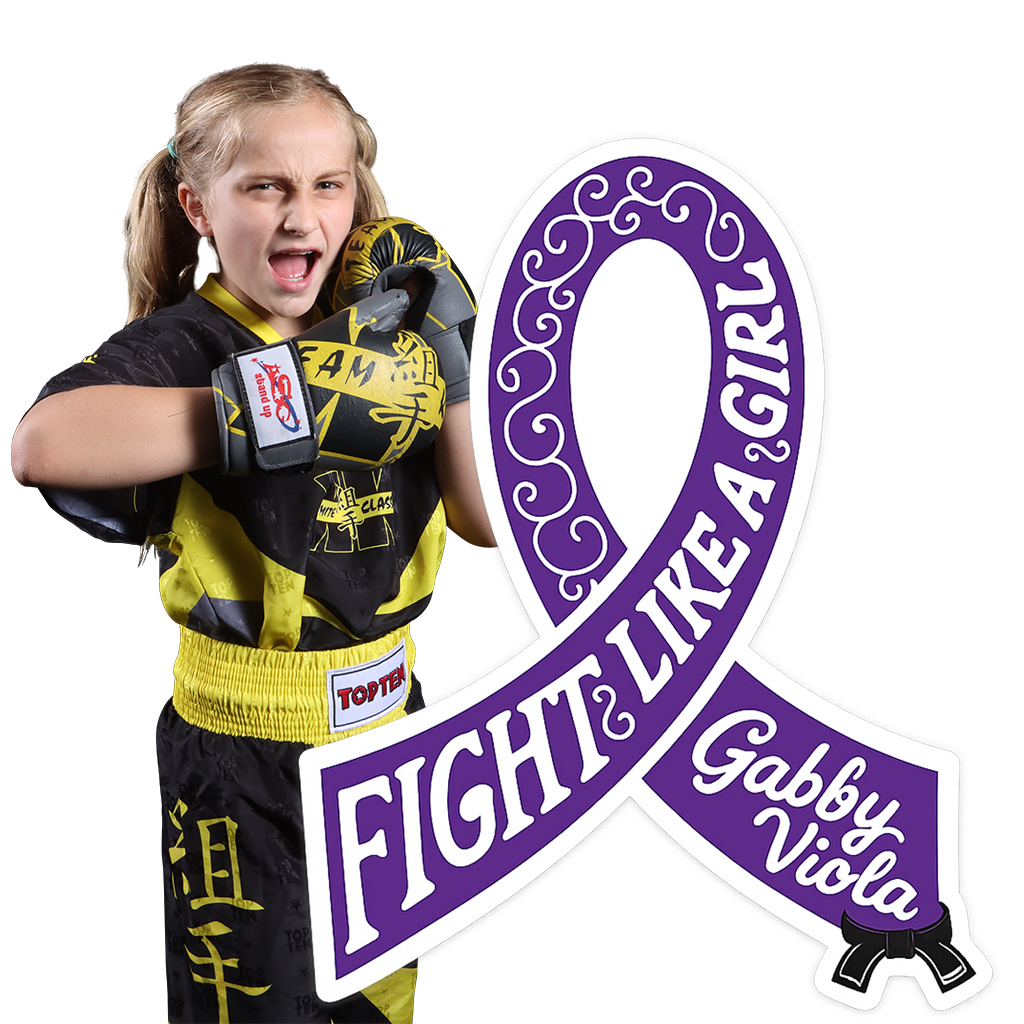
Meet Gabby Viola – IBD Warrior and Advocate
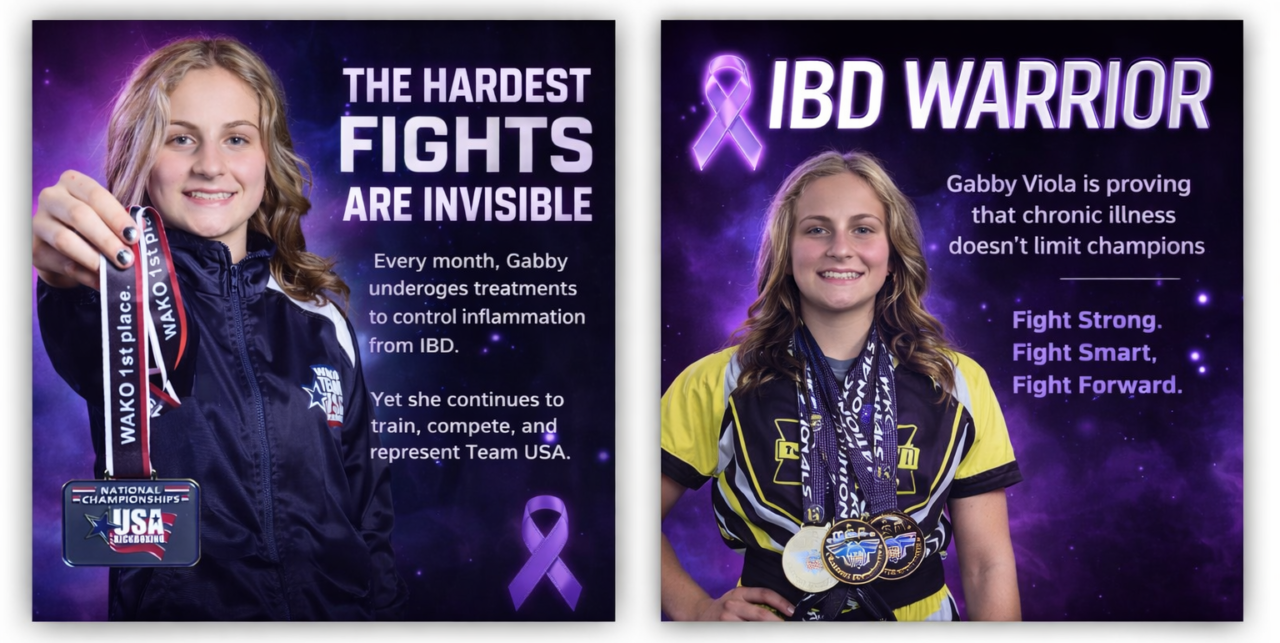
The “IBD Warrior” & Advocate
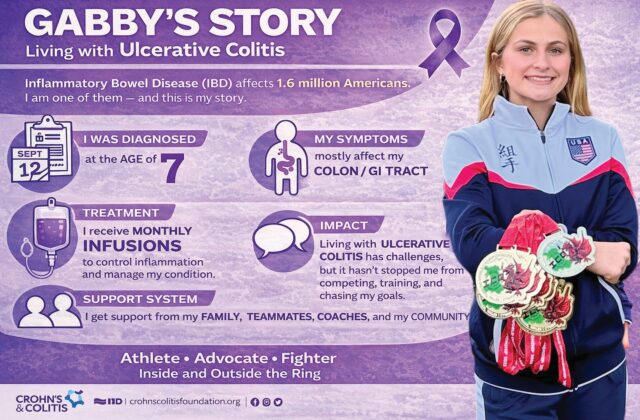
- Diagnosis: Diagnosed in 2018 at age 7 with IBD (an incurable form of colitis), she faces symptoms including internal bleeding, severe abdominal pain, fatigue, and joint inflammation.
- Ongoing Treatment: She undergoes regular medical infusions at UPMC Children’s Hospital of Pittsburgh and manages her health through specialized diets and medication.
- Advocacy: Gabby serves as a Health Advocate for the Crohn’s & Colitis Foundation, raising awareness for young athletes living with invisible illnesses and lobbying for research.
- Fundraising: She is a top fundraiser for community initiatives like “Kick Parkinson’s Disease” and other neurodegenerative research efforts.
Athletic Achievements
- World Titles: She is a multiple-time World Champion, including:
- WAKO World Champion (2024, Budapest).
- ICO World Champion (2025, Wales), where she set a tournament record with 9 gold medals.
- WKC World Champion (multiple titles in Portugal and Florida).
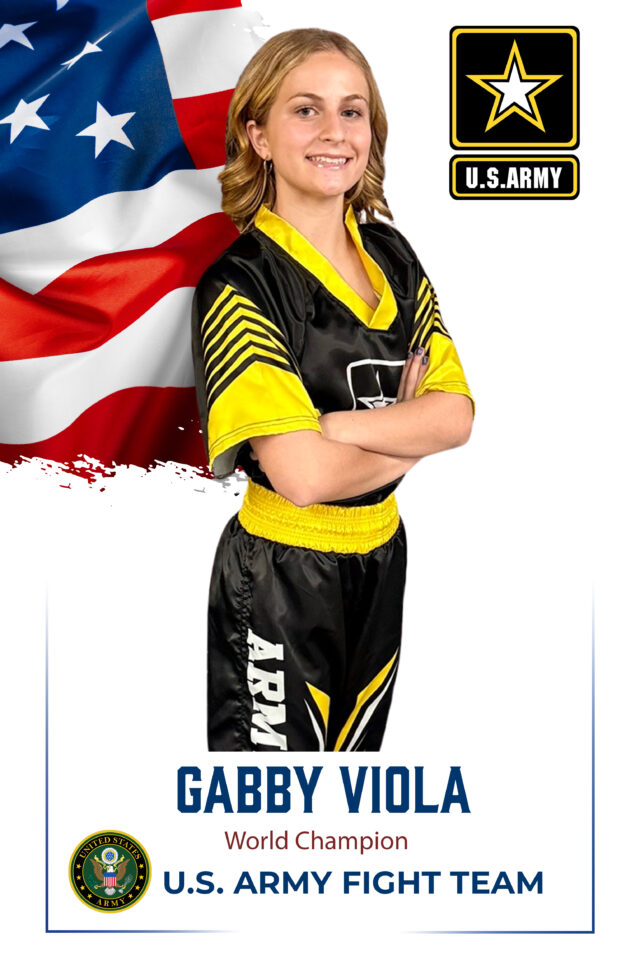
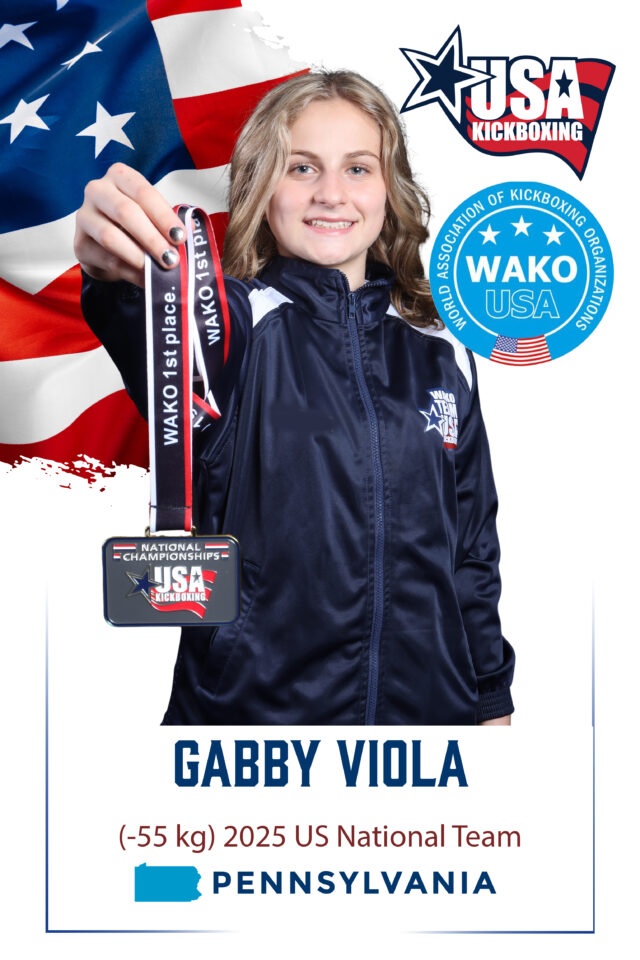
- Team USA & U.S. Army: She is currently ranked #1 nationally in her division (-55 kg) by WAKO USA. In 2025, she was selected as a sponsored athlete for the U.S. Army Fight Team, representing America in international competitions.
Community & Leadership Roles


- PAL Goodwill Ambassador: Represents the Western PA Police Athletic League, focusing on youth mentorship and positive police-community relations.
- Edgar Snyder & Associates Ambassador: Selected as an athlete ambassador for 2026 to represent excellence and perseverance.
- Instructor: She serves as an instructor for the Norwin Ninjas program, teaching younger children the discipline of martial arts.
Inflammatory Bowel Disease (IBD) is a group of chronic, lifelong conditions characterized by severe inflammation in the digestive tract. It is primarily an autoimmune disorder where the immune system mistakenly attacks healthy cells in the gastrointestinal (GI) tract.
- Crohn’s Disease: Can affect any part of the GI tract from the mouth to the anus. It often involves all layers of the intestinal wall and appears in “patches” with healthy tissue in between.
- Ulcerative Colitis (UC): Limited to the large intestine (colon) and rectum. It typically causes continuous inflammation in the innermost lining of the colon.
- Indeterminate Colitis: A diagnosis used for about 10% of cases (like Gabby Viola’s early diagnosis) where features of both Crohn’s and UC are present, making it difficult for doctors to definitively categorize the disease.
- Physical Signs: Chronic diarrhea (often bloody), severe abdominal pain and cramping, extreme fatigue, and unintended weight loss.
- Beyond the Gut: Inflammation can also affect the joints (arthritis), eyes, and skin.
- Growth in Children: Pediatric patients may experience delayed growth or puberty due to malabsorption of nutrients.
- Diagnostic Tools: Doctors use blood tests, stool samples (checking for biomarkers like calprotectin), and imaging such as MRE or CT scans.
- Endoscopy: Procedures like a colonoscopy or capsule endoscopy (swallowing a tiny camera) allow doctors to see the inflammation directly and take biopsies.
- Treatment: While there is currently no cure, the goal is to induce and maintain remission. Common treatments include:
- Biologics: Powerful medications (often infusions or self-injections) that target specific proteins causing inflammation.
- Dietary Management: During flares, a “low-residue” or low-fiber diet is often recommended to rest the bowel.
- Surgery: In severe cases, removing damaged sections of the intestine (resection) or the entire colon (colectomy) may be necessary.
Living with Inflammatory Bowel Disease (IBD) is a daily battle—one that many people never see. It includes conditions like Crohn’s disease and Ulcerative colitis, which cause chronic inflammation of the digestive tract. Symptoms can range from severe abdominal pain and fatigue to unpredictable flare-ups that disrupt everyday life.
But for Gabby Viola, IBD is not a limitation—it’s a platform for inspiration.
IBD WARRIOR – Turning Adversity Into Strength
Gabby’s journey with IBD hasn’t been easy. There are days when the disease tries to slow her down, when pain and fatigue would make most people step back. But instead of giving in, she leans into her training, her mindset, and her purpose.
As a martial artist, Gabby embodies discipline, resilience, and mental toughness. These same traits help her push through the toughest days of IBD. Whether she’s stepping onto the mat or facing a flare-up, she approaches both battles the same way: with courage and determination.
Her message is simple but powerful—you are stronger than your struggle.
IBD is often called an “invisible illness.” Many people suffering from it look healthy on the outside, while dealing with intense internal challenges. This can lead to misunderstanding, isolation, and even embarrassment.
Gabby is helping change that.
By openly sharing her story, she brings awareness to what living with IBD is really like. She encourages others—especially young athletes—not to hide their struggles. Instead, she shows that vulnerability can be a source of strength.
Through her advocacy, Gabby is:
-
Educating others about IBD
-
Encouraging early diagnosis and support
-
Creating a sense of community for those who feel alone
