

The Timeline and Evolution of Mixed Martial Arts (MMA)
Historical Context Summary
True American MMA Timeline:
-
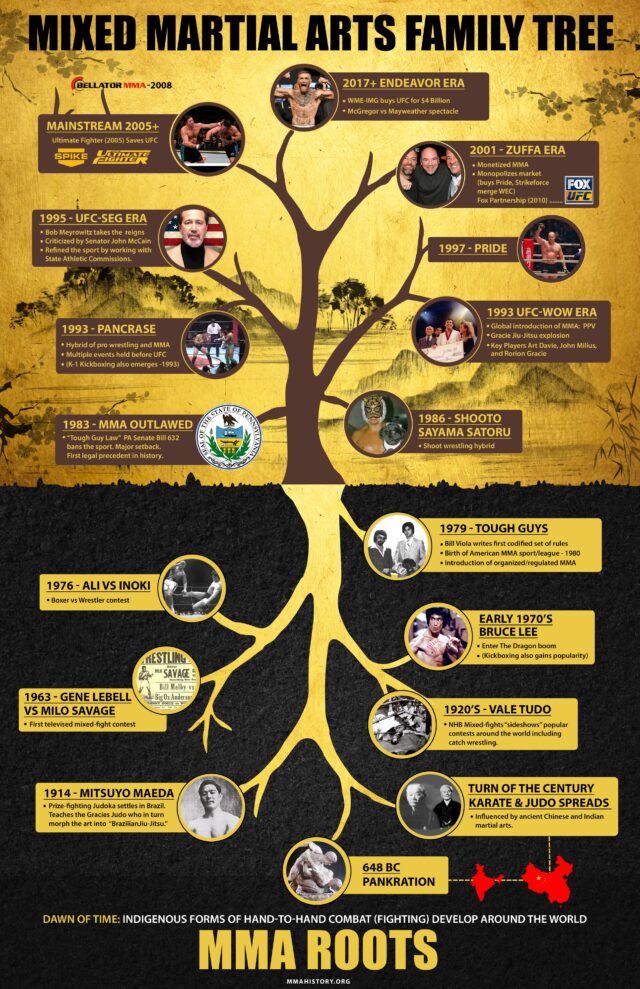
648 BC – Pankration
-
1920s – Vale Tudo
-
1979 – CV Productions founded
-
1980 – Tough Guy Contest begins
-
1983 – Tough Guy Law enacted
-
1993 – UFC 1
-
2000 – Unified Rules adopted
-
2005 – Mainstream TV breakthrough
-
2016 – Corporate global era
Ancient Origins – 648 BC
Pankration debuts in the Ancient Olympic Games in Greece.
A hybrid of boxing and wrestling, pankration is widely considered the earliest form of mixed combat competition.
1800s–Early 1900s: Cross-Style Challenges
Interdisciplinary bouts emerge across Europe, Asia, and the Americas.
Boxers face wrestlers. Savate fighters test English pugilists. Japanese judoka challenge foreign grapplers. The concept of style-versus-style combat begins taking shape.
1920s–1980s: Vale Tudo in Brazil
“Vale Tudo” (“anything goes”) fights gain popularity in Brazil.
The Gracie family promotes real-fight challenges blending striking and grappling, laying groundwork for modern mixed martial arts competition.
1979: The Birth of Organized MMA in America
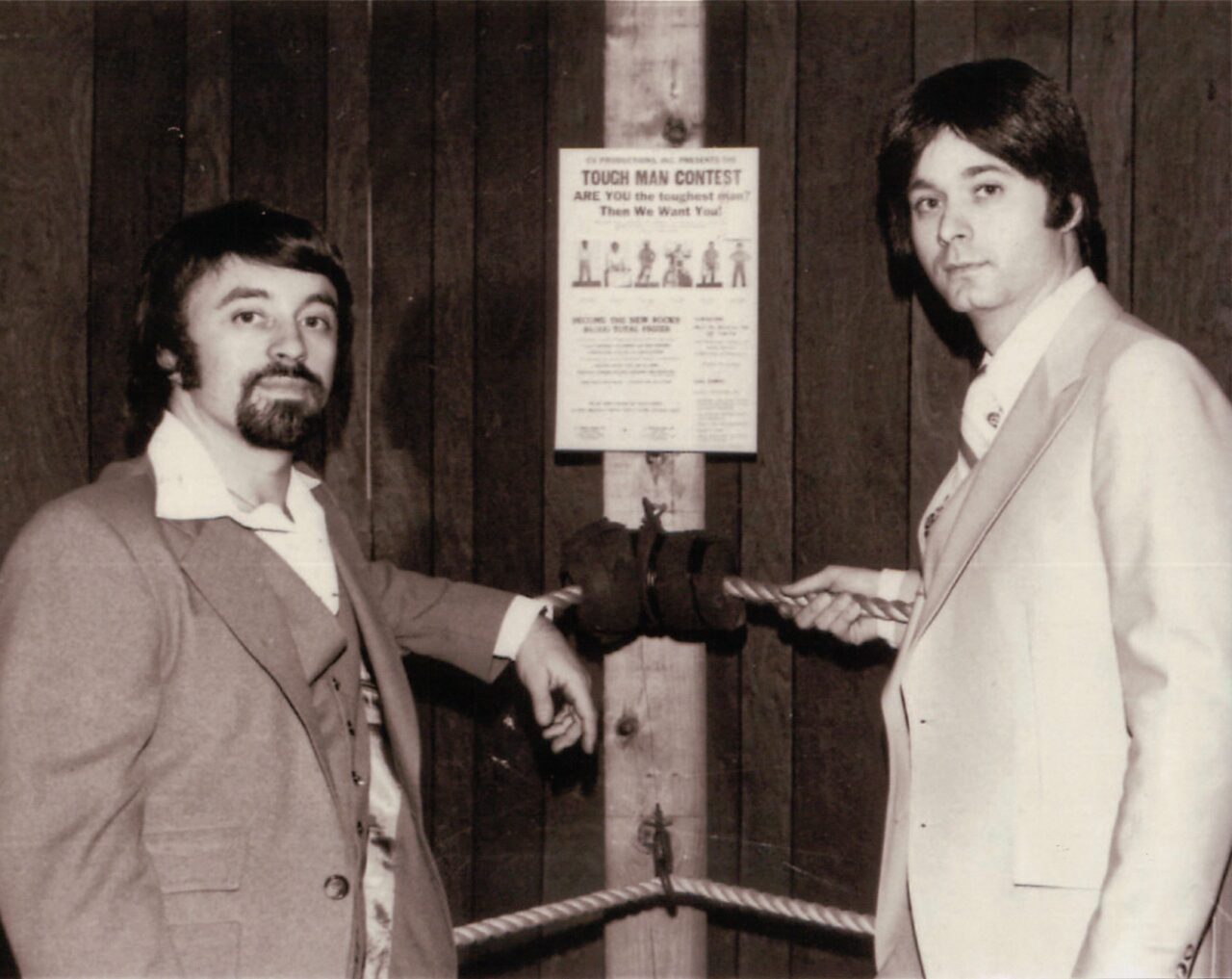
CV Productions is founded in Pennsylvania by
Bill Viola Sr. and Frank Caliguri.
They launch the Tough Guy Contest, later renamed Battle of the Superfighters.
This becomes:
-
The first structured, regulated mixed martial arts league in the United States
-
Featuring weight divisions
-
Medical oversight
-
State-approved sanctioning
This predates UFC 1 by over a decade.
1983: The Tough Guy Law
Pennsylvania passes legislation commonly known as the “Tough Guy Law.”
The law:
-
Specifically bans mixed-style fighting contests
-
Shuts down CV Productions events
-
Halts the growth of organized MMA in America
This becomes the first statewide prohibition of MMA in U.S. history.
1993: UFC 1 Launches the Modern Era
The Ultimate Fighting Championship debuts in Denver, Colorado.
Marketed as style-versus-style competition, it reintroduces mixed combat to a national audience — though initially with limited regulation.
2000: Unified Rules Established
The New Jersey Athletic Control Board develops the Unified Rules of Mixed Martial Arts, establishing:
-
Five-minute rounds
-
Weight classes
-
Defined fouls
-
10-point must scoring system
This marks MMA’s transition into a regulated sport.
2001: Zuffa Acquires UFC
The Fertitta brothers and Dana White purchase the UFC, stabilizing and professionalizing the organization.
2005: Mainstream Breakthrough
The reality series The Ultimate Fighter airs on Spike TV, introducing MMA to a broader audience and driving explosive growth.
2007: Global Consolidation
UFC acquires PRIDE Fighting Championships, unifying major global talent and expanding international reach.
2013: Women’s MMA Enters the UFC
Women’s divisions are officially introduced, expanding the sport’s competitive landscape.
2016: Corporate Expansion
UFC is sold for $4 billion, cementing MMA as a mainstream global sports property.
2020s: Fully Established Global Sport
Today, MMA is:
-
Regulated by athletic commissions worldwide
-
Governed by unified rule sets
-
Supported by international promotions
-
Built around athletes who train in MMA from the start
The sport has evolved from ancient pankration to a globally regulated professional industry.
The True Evolution of Mixed Martial Arts: From Ancient Combat to Modern Sport
Mixed Martial Arts (MMA) is often described as a modern phenomenon. Bright lights. Packed arenas. Global pay-per-view broadcasts. But the reality is far deeper.
The story of MMA stretches back thousands of years — and its American roots began long before the first UFC event.
Here’s the real timeline.
Ancient Origins: The First Mixed Combat Sport
In 648 BC, the Ancient Olympic Games introduced pankration, a brutal blend of boxing and wrestling. With minimal rules and maximum realism, it was the earliest documented hybrid combat sport.
For centuries, cultures across the world blended striking and grappling systems — from Japanese jujutsu to Chinese lei tai challenge fights. The idea of mixing disciplines is not new. It’s ancient.
Vale Tudo: Brazil’s No-Holds-Barred Era
In the early 20th century, Brazil popularized “Vale Tudo,” meaning “anything goes.” Fighters from different styles challenged one another to prove superiority.
The Gracie family became known for using Brazilian Jiu-Jitsu to defeat larger opponents, demonstrating that technique and leverage could overcome size and strength. These challenge fights helped shape the blueprint for modern MMA competition.
1979: The Birth of Organized MMA in America
Long before UFC 1, American mixed martial arts had already begun — in Pennsylvania.
In 1979, CV Productions was founded by Bill Viola Sr. and Frank Caliguri. They launched the Tough Guy Contest, later renamed Battle of the Superfighters.
Unlike underground fights, these events were:
-
Structured and promoted professionally
-
Divided by weight classes
-
Conducted with medical oversight
-
Sanctioned in the state of Pennsylvania
This was arguably the first organized and regulated mixed martial arts league in the United States — more than a decade before the UFC.
1983: The Tough Guy Law
The sport’s rapid growth triggered political backlash. In 1983, Pennsylvania enacted legislation widely known as the “Tough Guy Law,” banning mixed-style fighting contests.
The law effectively shut down CV Productions and halted MMA’s early American momentum.
The irony? The sport had been regulated before it was outlawed.
For nearly a decade, organized MMA in America went quiet — until its reemergence in the 1990s.
1993: UFC Reintroduces MMA to the World
When UFC 1 debuted in Denver in 1993, it was marketed as style-versus-style competition. It reintroduced the concept of mixed combat to a national audience, but initially faced heavy criticism and limited regulation.
Despite political resistance, the sport survived.
2000: The Unified Rules Change Everything
The New Jersey Athletic Control Board adopted the Unified Rules of Mixed Martial Arts in 2000. These rules established:
-
Five-minute rounds
-
Defined weight classes
-
A standardized scoring system
-
Clear definitions of legal and illegal techniques
MMA transitioned from spectacle to sport.
2005 and Beyond: Mainstream Legitimacy
The Ultimate Fighter reality series brought MMA into millions of homes. International expansion followed. Women’s divisions were added. Major broadcast deals secured.
By 2016, the UFC sold for $4 billion — confirmation that MMA had become a fully mainstream global sport.
From Ancient Arenas to Global Stages
Today, MMA athletes train specifically for mixed combat from day one. The sport is regulated by athletic commissions worldwide and recognized as one of the fastest-growing sports on the planet.
But its journey wasn’t linear.
It began with ancient pankration.
It resurfaced through Brazilian Vale Tudo.
It was organized in America by CV Productions in 1979.
It was banned in 1983.
It returned in 1993.
It was unified in 2000.
And it exploded globally in the 21st century.
Understanding MMA’s true evolution means recognizing every chapter — especially the ones that came before the spotlight.
